


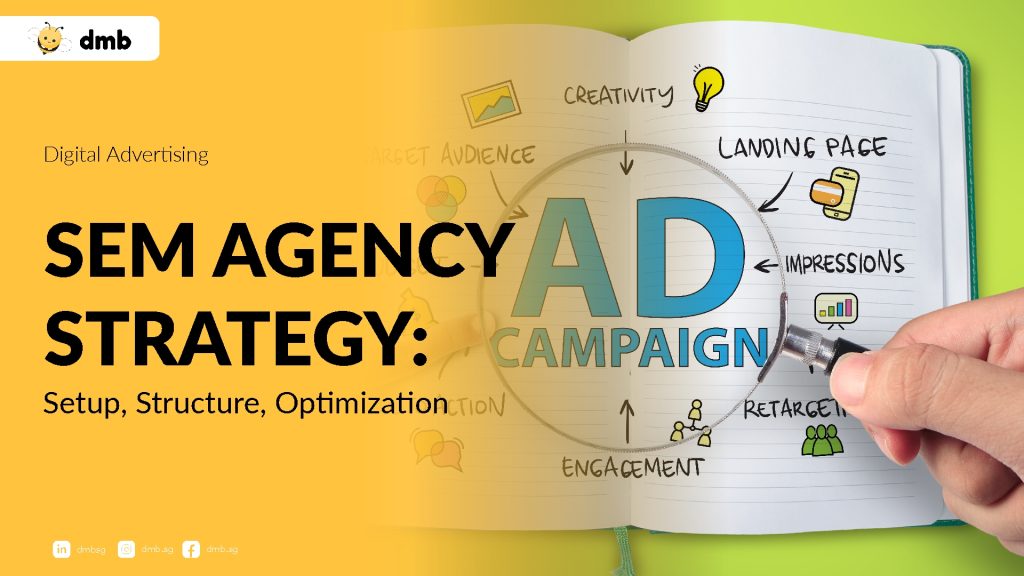
Search Engine Marketing (SEM) is one of the fastest ways for businesses to get in front of high-intent audiences who are actively searching for products, services, or solutions online. Unlike SEO which focuses on organic visibility over time, an SEM campaign lets you pay to show up at the top of search results, delivering immediate traffic and measurable results when done right. That’s why setting up your SEM campaign properly is crucial, especially if you want to spend your budget efficiently and not waste clicks on irrelevant traffic. In this guide, we’ll walk you through each step so you can build, launch, and optimize your SEM campaign like a pro.
What Is Search Engine Marketing (SEM)?
Before diving into setup, it’s important to understand what SEM actually is. SEM refers to paid advertising that appears on search engines, where advertisers bid on keywords relevant to their target audience. These ads usually appear at the top of search engine results pages (SERPs) and are charged on a pay-per-click (PPC) basis, meaning you only pay when someone clicks your ad.
Core Components of an SEM Campaign
- Keyword Targeting: Choosing the right search terms people use when searching online.
- Ad Copy: The actual text users see crafted to entice clicks.
- Bidding Strategy & Budget: Determines how much you pay for each click and where you want your ad shown.
- Landing Pages: Where users land after clicking your ad, these must convert.
- Tracking & Analytics: To measure performance and refine your campaign.
Step-by-Step: How to Set Up SEM Campaign
1. Define Your SEM Goals
The first step is to define what you want from your campaign:
- Increase website traffic
- Generate leads
- Boost sales
- Increase brand awareness
Without clear goals, you can’t measure success — and you risk spending money without results.
2. Conduct Thorough Keyword Research
Keyword research is the foundation of any SEM campaign. A keyword is a search term your audience uses. You want:
- Keywords with high commercial intent
- Target keywords that match what your audience is searching for
- Long-tail keywords that are specific and often cheaper to bid on
Tools like Google Keyword Planner, SEMrush, or Ahrefs can help you uncover search volume, competition, and intent.
Tip: Use negative keywords to exclude irrelevant searches, this helps reduce wasted spend.
3. Choose the Right SEM Platform
While Google Ads is the most popular choice, other platforms like Microsoft Ads (Bing) can also be effective, especially if your audience uses alternative search engines.
4. Build the Campaign Structure
To keep things organized (and effective), structure your SEM account with:
- Campaigns: High-level buckets for goals
- Ad Groups: Sets of similar keywords
- Ads: Individual ad copy that users see
A thoughtful structure enhances relevance, improves Quality Score, and ultimately lowers cost per click.
5. Create Compelling Ad Copy
Your ad copy must match the keyword intent and deliver a clear reason to click. Include:
- Target keyword
- A powerful value proposition
- A clear Call-To-Action (CTA)
People click on ads that answer their questions or solve their problems, so make it clear.
6. Optimize Landing Pages
Once users click your ad, the next critical step is the landing page. It must be:
- Relevant to the ad text
- Fast loading and mobile friendly
- Designed to convert visitors into leads or customers
A mismatch between ad promise and landing page experience harms performance and can raise your cost.
7. Set Budget & Bidding Strategy
Decide how much you will spend each day or month. SEM platforms let you choose:
- Manual Bids – Full control
- Automated Bids – Let the platform optimise bids
Spend more budget on top-performing keywords, and adjust your bids over time to improve ROI.
8. Launch & Monitor Performance
Once the campaign is live, monitor key metrics like:
- Click-Through Rate (CTR)
- Cost Per Click (CPC)
- Conversion Rate (CVR)
- Cost Per Acquisition
Monitoring regularly allows you to refine targeting, tweak ads, and cut underperforming keywords.
9. Continually Optimize & Refine
SEM is never truly done. A strong campaign is always optimized over time:
- A/B test different headlines and CTAs
- Refresh keywords
- Adjust targeting based on performance data
Continuous testing ensures your ads stay competitive and cost-efficient.
SEM Best Practices You Should Follow
- Focus on search intent — what problem is the user trying to solve?
- Use ad extensions to increase visibility
- Track conversions to measure real ROI
- Segment campaigns by goals or product categories
- Monitor competition and adjust bids accordingly
SEM vs SEO: Why Both Matter
While SEM gets immediate traffic through paid ads, SEO builds long-term organic visibility. Most successful digital strategies combine both: SEM drives short-term results while SEO boosts authority for lasting success.
Conclusion
Setting up an SEM campaign can feel overwhelming at first — but with a clear step-by-step approach, you can build a campaign that drives quality traffic, increases conversions, and gives your business measurable online performance. From keyword research to landing page optimization and ongoing monitoring, each step contributes to campaign success.
SEM isn’t a one-and-done activity it’s a process that grows smarter over time through data, testing, and iteration. Curating an effective SEM campaign will ultimately help you reach the right audience exactly when they’re looking for your services.
Want More Insights?
Explore related articles on SEM strategies and digital marketing to elevate your online advertising results:
Check out our guide on digital ad optimisation and advanced Google Ads tactics on DMB.sg!
Free Expert
Digital Marketing Consultation
Our expert digital marketing consultants offer you a no-risk marketing consultation that covers
Developing a tailored strategy to boost your leads and sales.
Uncovering the five key elements vital for digital marketing success.
See what your competitors are up to and learn how to beat them.