


Choosing social media platforms for a business can feel deceptively simple. The most common advice is to “be everywhere,” publish consistently, and follow whatever channel is trending.
However, that approach often creates more work than results.
A business may invest time in posting daily, editing videos, replying to comments, and running campaigns, yet still struggle to attract the right audience or generate meaningful enquiries. The issue is not always content quality. Often, it is platform fit.
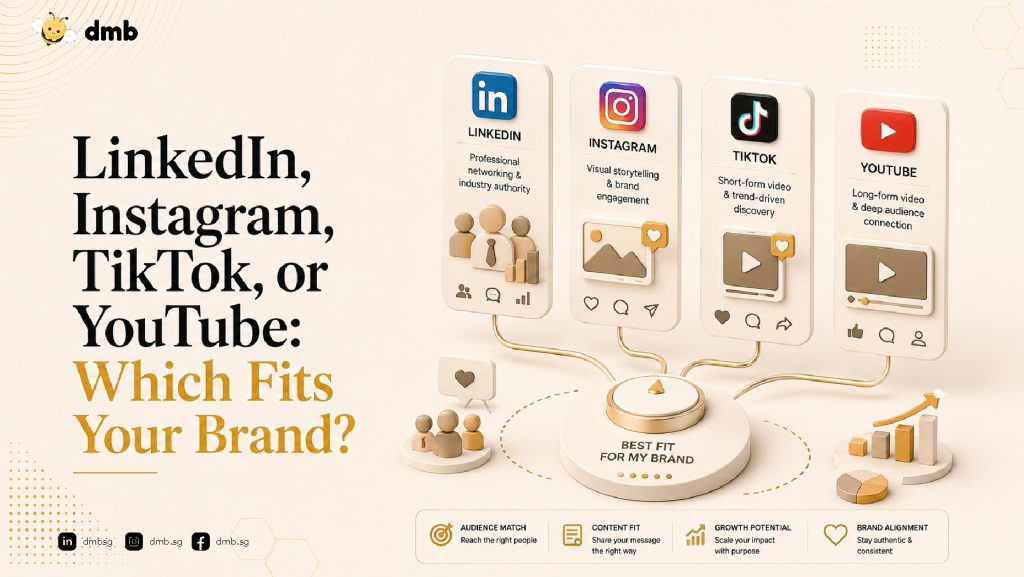
Every social media platform has a different audience mindset, content behaviour, discovery mechanism, and commercial role. LinkedIn is built around professional relationships and industry conversation. Instagram is shaped by visual identity and community. TikTok rewards quick, relevant storytelling. YouTube supports deeper education and long-term discoverability. Facebook remains useful for communities, local audiences, and retargeting.
Therefore, the best platform is not necessarily the biggest one.
It is the platform that gives your business the clearest path to reach the right people, demonstrate value, and move them closer to action.
This guide explains how to choose the best social media platforms for business based on your goals, audience, content capability, and customer journey.
Why Platform Choice Shapes Marketing Performance
Social media is not one channel. It is a collection of different environments where people discover brands, learn about products, compare solutions, and interact with communities.
As a result, treating every channel the same way can weaken performance.
For example, a business-to-business technology company may find more value in professional insights and case studies than short entertainment-led videos. Meanwhile, a visual consumer brand may gain stronger traction through creator partnerships, product demonstrations, and short-form content.
The important question is not:
“Which platform has the most users?”
Instead, ask:
“Where is our audience most likely to pay attention to this type of message?”
A practical platform decision should consider four factors:
- Audience fit: Are the people you want to reach active and reachable there?
- Content fit: Can your team create content that works naturally on the platform?
- Commercial fit: Can the platform support awareness, trust, traffic, leads, or retention?
- Operational fit: Can you maintain quality activity without overextending your team?
A platform with a large audience is not automatically a good investment. A smaller but more relevant audience can be far more valuable.
Best Social Media Platforms for Business: A Goal-Based Overview
The best social media platform depends on what the business needs to achieve.
Some businesses need broad awareness. Others need to build trust before a high-value sale. Some need customer conversations, while others need a reliable channel for product education.
The table below provides a practical starting point.
| Platform | Best For | Strong Content Formats | Primary Business Value |
| B2B, professional services, recruitment, thought leadership | Expert posts, case studies, articles, reports | Trust, qualified leads, authority | |
| Visual brands, lifestyle products, services, community | Reels, carousels, Stories, creator content | Brand recognition, discovery, engagement | |
| TikTok | Reach, discovery, relatable education, entertainment | Short videos, founder content, trends | Awareness, audience growth, cultural relevance |
| YouTube | Education, tutorials, reviews, product demonstrations | Long-form video, Shorts, explainers | Search visibility, trust, consideration |
| Communities, local businesses, groups, retargeting | Group posts, events, video, paid campaigns | Community, customer support, remarketing | |
| X | Real-time commentary, niche industries, live conversation | Commentary, threads, updates | Timeliness, industry participation |
This framework should not be treated as a rigid rule. Instead, use it to identify the platforms that are most aligned with your business model.
LinkedIn for B2B Growth and Professional Trust
LinkedIn is often the strongest platform for businesses that sell to other businesses, professionals, decision-makers, or specialised audiences.
It is especially useful for:
- Technology companies
- Financial services firms
- Consultants
- Agencies
- SaaS brands
- Professional service providers
- Recruitment and employer branding
- Founders building personal authority
The platform supports content that helps people think, learn, and make business decisions. Therefore, promotional posts alone are rarely enough. Strong LinkedIn content usually provides insight, perspective, proof, or practical guidance.
Useful formats include:
- Industry observations
- Founder-led posts
- Case studies
- Customer success stories
- Frameworks and checklists
- Product explainers
- Webinar invitations
- Research-led carousels
- Expert newsletters
LinkedIn’s advertising ecosystem also supports lead-generation forms, document ads, thought-leader ads, and campaign formats designed around professional targeting. This makes it useful when a business needs to connect content with a clear lead-generation process.
However, LinkedIn is not the right choice simply because a business sells something expensive. It works best when the brand can contribute useful expertise and communicate with professional clarity.
Instagram for Brand Recognition and Visual Storytelling
Instagram remains a valuable platform for brands that need to build familiarity through visuals, personality, storytelling, and community interaction.
It is particularly useful for:
- Consumer brands
- Hospitality businesses
- Lifestyle companies
- Beauty and wellness providers
- Retail and e-commerce businesses
- Creative agencies
- Food and beverage brands
- Service businesses with a visual customer journey
Instagram works well when a business can show rather than only explain.
For example, an agency can show project outcomes, design processes, team culture, and customer stories. A restaurant can use video to showcase dishes, atmosphere, customer reactions, and behind-the-scenes preparation. A service business can use carousels to explain common customer questions in a visual, approachable way.
A balanced Instagram strategy may include:
- Reels for reach and discovery
- Carousels for education and saves
- Stories for daily interaction
- Testimonials for trust
- Founder or team content for human connection
- Direct-message prompts for enquiry generation
Moreover, Instagram should not be treated as a portfolio only. It is more effective when it helps potential customers understand the problem you solve, the people behind the brand, and the proof that supports your claims.
TikTok for Discovery and Short-Form Education
TikTok is often associated with entertainment. Nevertheless, it has become an important discovery platform for brands that can communicate ideas quickly, clearly, and naturally.
It can be useful for:
- Businesses targeting younger professionals or consumers
- Consumer technology brands
- E-commerce companies
- Education-led services
- Startups
- Founder-led businesses
- Brands with a strong personality or point of view
The platform rewards content that feels native rather than overly polished. A highly scripted advertisement may struggle, while a simple video with a clear hook, useful insight, and relatable delivery can perform well.
Strong TikTok content ideas include:
- “Three mistakes businesses make when…”
- “What people misunderstand about…”
- “A quick way to improve…”
- “Behind the scenes of how we…”
- “What happened when we changed…”
- “The truth about…”
However, businesses should avoid copying trends without purpose. Trend participation only works when it fits the brand voice and still provides relevance to the audience.
TikTok is often most effective at the top of the funnel. It can generate discovery and attention. To turn that attention into results, businesses need a strong profile, a clear call to action, and a useful next step such as a website page, product link, newsletter, or consultation form.
YouTube for Search Visibility and Deeper Customer Education
YouTube is not only a video platform. It is also a powerful education and discovery environment.
For businesses with complex products, high-consideration services, or knowledge-based offers, YouTube can provide long-term value because videos may continue to be discovered through search long after publication.
It is a strong option for:
- Technology companies
- Financial education brands
- SaaS businesses
- Consultants
- Product-led businesses
- B2B services
- Tutorial-based businesses
- Businesses with complex customer questions
Useful YouTube formats include:
- Product demonstrations
- Explainer videos
- Tutorials
- Frequently asked questions
- Customer stories
- Expert interviews
- Industry trend analysis
- Webinars
- Comparison videos
- Short-form educational clips
YouTube is especially valuable when a customer needs more information before taking action. Instead of expecting a prospect to make a decision after seeing one short video, a business can use YouTube to build understanding and trust over time.
Research from Google and BCG has also suggested that video can influence awareness, consideration, and purchase decisions across the customer journey. This reinforces the value of educational video when businesses want to support informed decision-making.
Facebook for Communities, Local Reach, and Retargeting
Although newer platforms attract more attention, Facebook remains useful for specific business objectives.
It can work well for:
- Local businesses
- Community-led brands
- Events and workshops
- Service providers
- Real estate businesses
- Parent-focused businesses
- Interest-based communities
- Retargeting campaigns
Facebook Groups can be particularly valuable when a business wants to build an audience around a shared interest, problem, or local community.
For instance, a property business may use a group to share neighbourhood insights and buyer education. A health-focused business may build a community around practical wellness advice. A local service provider may use Facebook to publish updates, reviews, event announcements, and customer support information.
In addition, Facebook remains relevant for paid campaigns because Meta’s advertising ecosystem allows businesses to combine Facebook and Instagram placements, retarget website visitors, and reconnect with people who have previously engaged with content.
When X and Niche Communities Make Sense
X can be useful for businesses operating in fast-moving industries where timely commentary matters.
This may include:
- Technology
- Finance
- Startups
- Media
- Web3
- Gaming
- Policy-focused sectors
- Investor communities
The platform is less suited to businesses that need highly visual storytelling or a slow, trust-building sales journey. However, it can be valuable for brands that have a credible point of view and can contribute to industry conversations consistently.
Meanwhile, niche communities may offer opportunities beyond the major platforms. These could include Reddit communities, Discord groups, online forums, specialist newsletters, or industry-specific communities.
The principle remains the same: go where relevant conversations already happen.
A Platform Prioritisation Framework for Small Teams
Most businesses should not start with six active platforms.
Instead, choose one primary channel, one supporting channel, and one owned destination such as a website, email list, or knowledge hub.
A simple structure could look like this:
Primary Platform
This is where your business publishes consistently and develops a clear content identity.
Examples:
- LinkedIn for B2B expertise
- Instagram for visual brand building
- TikTok for discovery
- YouTube for long-form education
Supporting Platform
This platform helps you repurpose strong content in a format that fits a second audience behaviour.
For example:
- Turn a YouTube explainer into LinkedIn insights
- Turn a LinkedIn carousel into Instagram content
- Turn a TikTok video into an Instagram Reel
- Turn customer questions into Facebook community posts
Owned Destination
Social platforms are important, but they should not be the final destination.
Your website, newsletter, landing page, or CRM should capture the value created by social media. This is where businesses can collect leads, provide deeper information, and build direct customer relationships.
Therefore, every platform strategy should include a clear next step.
How to Measure Whether a Platform Is Worth Keeping
A platform should not be judged only by follower count.
Instead, review whether it is helping the business create meaningful outcomes.
Track indicators such as:
| Objective | Useful Metrics |
| Awareness | Reach, video views, profile visits, branded search interest |
| Engagement | Saves, shares, comments, direct messages |
| Trust | Positive sentiment, customer questions, testimonials, repeat viewers |
| Traffic | Link clicks, website sessions, landing-page visits |
| Leads | Form submissions, consultation bookings, qualified enquiries |
| Revenue Contribution | Pipeline value, assisted conversions, closed deals |
Use UTM parameters when sharing links so that your team can identify which platform and content format generates meaningful website activity.
For example:
https://www.example.com/service?utm_source=linkedin&utm_medium=organic_social&utm_campaign=business_growth
Over time, this data will reveal whether a platform is generating only attention or real commercial value.
Build E-E-A-T Through the Right Social Channels
Selecting the right platform is also part of building Experience, Expertise, Authoritativeness, and Trustworthiness.
Show Experience
Use your social channels to share lessons from real projects, customer challenges, and business decisions. Specific examples are more credible than general advice.
Demonstrate Expertise
Create useful content from founders, specialists, and practitioners. Explain complex topics in a way that helps the audience make better decisions.
Build Authoritativeness
Support major claims with reliable research, industry sources, case studies, and clear examples. Over time, publish content that becomes a reference point for your audience.
Protect Trustworthiness
Avoid exaggerated promises, disclose partnerships when relevant, verify data before publishing, and respond professionally to questions or criticism.
The platform itself does not create trust. The quality, consistency, and integrity of your communication do.
Conclusion
The best social media platforms for business are not the same for every company.
LinkedIn may be the right choice for professional trust and B2B lead generation. Instagram may help a brand become more recognisable and visually engaging. TikTok can support discovery and fast-moving education. YouTube can build long-term authority through searchable, in-depth video. Facebook may still be valuable for communities, local reach, and retargeting.
The most important step is to avoid spreading your team too thin.
Choose platforms based on audience behaviour, business objectives, content strengths, and the next action you want people to take. Then, build a consistent system around those channels.
When each platform has a clear role, social media becomes easier to manage and far more valuable to the business.
Free Expert
Digital Marketing Consultation
Our expert digital marketing consultants offer you a no-risk marketing consultation that covers
Developing a tailored strategy to boost your leads and sales.
Uncovering the five key elements vital for digital marketing success.
See what your competitors are up to and learn how to beat them.