


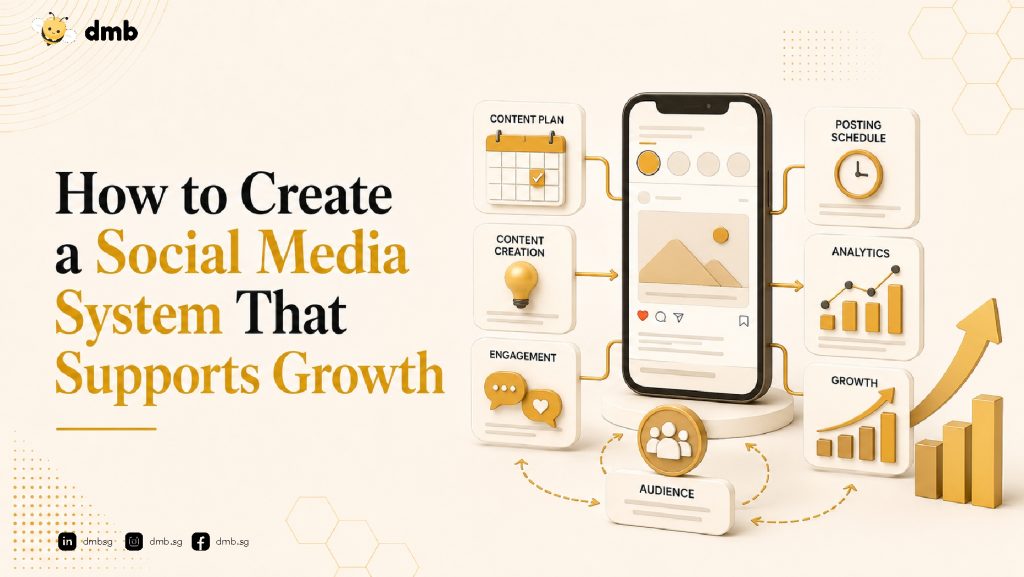
Social media is no longer a channel where businesses simply publish updates, share promotions, or follow trends. It has become a place where people discover brands, compare options, assess credibility, and decide whether a company is worth their attention.
For that reason, businesses need more than a content calendar.
They need a strategy that connects social media activity with business outcomes. That may include stronger brand awareness, more qualified website traffic, better lead quality, customer trust, or a healthier sales pipeline.
A well-designed social media strategy does not begin with the question, “What should we post today?” Instead, it starts with a more useful question:
“What should social media help this business achieve?”
This distinction matters. A post can receive thousands of views but produce little business value. On the other hand, a well-targeted post with modest reach may attract the right decision-maker, start a meaningful conversation, and eventually lead to a customer relationship.
Therefore, the goal is not simply to create more content. The goal is to create a system that makes the brand easier to discover, trust, understand, and choose.
Why Business Social Media Needs a Clear Growth Framework
Social media is increasingly part of the customer journey.
Before customers contact a business, they often check its LinkedIn page, Instagram account, TikTok videos, YouTube content, reviews, or recent comments. They want to see whether the company understands their needs, communicates clearly, and appears credible.
As a result, social media now supports several important business functions:
- Building brand awareness before customers are ready to buy
- Educating audiences about products, services, and industry issues
- Establishing trust through useful expertise and social proof
- Driving qualified traffic to service pages or landing pages
- Generating enquiries, bookings, downloads, or direct messages
- Supporting customer retention and ongoing relationships
- Gathering insight from questions, comments, and audience behaviour
Research snapshot: Singapore had 5.33 million active social media user identities in late 2025, equivalent to 90.6% of the total population. Internet penetration also reached 98.4%, showing why digital visibility is now an important part of how businesses are evaluated.
However, being active does not automatically mean being effective.
A company may publish regularly and still struggle to create demand because its content is too broad, too promotional, or disconnected from the customer journey. A strategic approach helps avoid this problem.
Social Media Strategy for Business: Start With Commercial Goals
The strongest social media strategies begin with business priorities.
For example, a technology company may need to explain a complex solution in a simpler way. A marketing agency may want to attract decision-makers who are looking for practical growth advice. Meanwhile, a finance-related business may need to build trust and demonstrate responsible expertise before asking audiences to take action.
Each objective requires a different content approach.
Set One Primary Objective
Instead of trying to achieve everything at once, identify the main outcome for the next three to six months.
Possible objectives include:
- Increase awareness among a specific target audience
- Generate qualified website traffic
- Drive consultation bookings
- Build a stronger pipeline of leads
- Improve engagement from existing customers
- Increase trust before a sales conversation
- Support a new product, service, or market launch
- Position the brand as a trusted industry voice
For instance, “grow our social media” is not a clear objective. A stronger version would be:
“Increase qualified traffic to our digital marketing service pages by publishing educational LinkedIn and Instagram content for business owners and marketing leaders.”
This objective provides direction. It identifies the audience, the platform, the content purpose, and the desired action.
Match Social Content With the Buyer Journey
People need different types of content depending on where they are in their decision-making process.
| Customer Stage | Business Objective | Effective Content Types |
| Awareness | Help new audiences discover the brand | Short videos, educational posts, industry insights |
| Consideration | Build trust and explain the offer | Case studies, guides, comparison posts, explainers |
| Decision | Encourage relevant action | Testimonials, FAQs, audits, consultations, demos |
| Retention | Keep customers engaged | Product updates, customer tips, community content |
| Advocacy | Encourage referrals and proof | Customer stories, user-generated content, reviews |
This framework prevents a common mistake: creating content only for reach.
Reach is important, but businesses also need content that guides people from interest to trust, and from trust to action.
Audience Research and Platform Selection
A successful social media strategy is built around audience behaviour, not internal assumptions.
Many businesses choose a platform because competitors are active there or because it is currently popular. However, popularity does not always equal relevance.
The right platform is the one where your ideal audience is most likely to engage with your message, content style, and offer.
Understand the Questions Behind Customer Decisions
Every content strategy should be informed by the questions customers ask before they buy.
These questions often include:
- What problem does this business solve?
- Is this service relevant to a company like mine?
- What makes this provider different from competitors?
- Can I trust the people behind the brand?
- Are there examples of real results?
- How much time, cost, or effort is involved?
- What happens after I send an enquiry?
When businesses create content around these real questions, they become more useful.
For example, instead of publishing a generic post that says, “We provide digital marketing services,” a company could publish:
“Why businesses with high website traffic can still struggle to generate leads.”
That topic creates curiosity while naturally leading to a deeper discussion about conversion, user experience, lead quality, and marketing strategy.
Give Each Platform a Clear Role
Businesses do not need to dominate every social platform. In fact, trying to be everywhere often creates inconsistent content and weak execution.
A better approach is to assign a role to each platform.
| Platform | Strategic Role |
| B2B authority, thought leadership, professional trust | |
| Brand personality, visual storytelling, social proof | |
| TikTok | Discovery, short-form education, relatable insight |
| YouTube | Tutorials, explainers, long-form expertise |
| Community building, local reach, retargeting | |
| X | Industry commentary, real-time updates, conversations |
The goal is not to copy the same post across every channel. Instead, keep the message consistent while adapting the format to suit the platform.
Build a Content Engine Instead of Posting Randomly
A content engine is a repeatable system that helps a business create relevant content without relying on last-minute ideas.
This is important because inconsistent posting usually leads to inconsistent positioning. When a brand publishes only when inspiration appears, the audience receives a fragmented view of what the business stands for.
A stronger content system is built around recurring themes.
Use Content Pillars That Support Brand and Revenue
Most businesses can work effectively with four to six content pillars.
1. Educational Content
Educational content helps audiences understand a topic, solve a problem, or make better decisions.
Examples include:
- How-to guides
- Industry myths versus facts
- Frameworks and checklists
- Common mistakes to avoid
- Short tutorials
- Trend explanations
- Step-by-step carousels
This content is especially valuable for businesses in technology, consulting, marketing, finance, and professional services because it demonstrates expertise before a formal sales conversation begins.
2. Proof and Credibility Content
Trust increases when people can see evidence.
Proof-based content may include:
- Customer testimonials
- Case studies
- Project highlights
- Before-and-after examples
- Team expertise
- Reviews
- Awards or certifications
- Media mentions
Rather than saying, “We deliver strong results,” show the process, outcome, lesson, or customer perspective behind the statement.
3. Brand Perspective Content
Strong brands are remembered because they have a clear point of view.
For example, a digital marketing business may explain why more traffic does not always produce more revenue. A technology company may share why automation should improve customer experience rather than replace it. A finance-related business may emphasise clarity and responsible education over exaggerated claims.
This type of content helps the brand become recognisable.
4. Human and Culture Content
People trust people.
Founder stories, team insights, behind-the-scenes content, learning moments, and work processes can make a business feel more approachable. However, human content should still have a purpose.
Instead of posting a random team photo, explain the customer challenge the team is solving, the insight gained from a project, or the thinking behind a business decision.
5. Conversion-Focused Content
Not every post should sell directly. Nevertheless, a strategy without conversion-focused content will struggle to create measurable business value.
Useful conversion content may include:
- Consultation invitations
- Free audits
- Service explainers
- Webinar registrations
- Downloadable guides
- Product demos
- FAQ posts
- Customer success stories
The key is to make the call to action feel like a natural next step.
Create Content That Earns Attention and Trust
In a crowded feed, polished design alone is not enough.
Audiences tend to respond to content that feels useful, specific, relevant, and easy to understand. Therefore, the most effective posts usually focus on one clear idea rather than trying to communicate everything at once.
A good piece of social content should do at least one of the following:
- Teach the audience something practical
- Simplify a complex issue
- Offer a useful framework
- Share a credible insight from experience
- Answer a common customer question
- Challenge an outdated assumption
- Show proof that the business understands its field
For example, instead of saying:
“We help businesses grow online.”
A stronger post may say:
“Most businesses do not have a traffic problem. They have a message clarity problem. Visitors leave because they cannot quickly understand what makes the offer different.”
The second version is more specific. It also gives the business a chance to demonstrate expertise without sounding overly promotional.
Industry research also shows why this matters. Many marketers now recognise social platforms as discovery channels, where consumers search for brands, research products, and evaluate recommendations before visiting a website.
Turn Engagement Into Qualified Business Opportunities
Likes and comments can indicate interest, but they should not become the final goal.
A stronger strategy creates paths for engaged users to take the next step. This may include visiting a landing page, downloading a guide, sending a direct message, booking a consultation, or requesting a quotation.
Use Calls to Action That Match Intent
The best call to action depends on the type of content.
For awareness content, use low-friction prompts:
- Save this for later
- Share this with your team
- Follow for more practical insights
- Read the full guide
- Tell us what you think
For consideration content, invite deeper engagement:
- Explore the case study
- Download the checklist
- Review the full framework
- Compare your current approach
- Visit the service page
For decision-stage content, make the action clear:
- Book a consultation
- Request a strategy session
- Speak with our team
- Get a free audit
- Start your project
A useful CTA does not pressure the audience. It simply helps them take the most logical next step.
Improve the Experience After the Click
Social media content can perform well, but the conversion journey may fail after someone clicks.
For instance, sending a potential customer from a highly specific post to a general homepage can create confusion. Instead, direct users to a relevant page with:
- A clear headline
- A concise explanation of the offer
- Strong customer proof
- A visible call to action
- A simple enquiry form
- Helpful FAQs
- Mobile-friendly design
Social media may start the conversation, but the landing page often determines whether that interest becomes a lead.
Community Management Is Part of Brand Strategy
Many businesses focus heavily on content production but underestimate the importance of replies, comments, and direct messages.
Community management is not an administrative task. It is a trust-building function.
Every response gives the business an opportunity to demonstrate professionalism, expertise, and care.
A reliable community management process should include:
- Response-time standards
- Brand tone-of-voice guidance
- Frequently asked question templates
- Comment moderation procedures
- Clear escalation paths for complaints
- Sales handover rules for qualified enquiries
- Monthly review of recurring customer questions
In addition, audience questions can become content ideas.
If several people ask the same question through comments or direct messages, that topic may deserve a post, video, article, or FAQ section. This approach makes content more grounded in real market needs.
Measure Performance Beyond Likes and Followers
A mature social media strategy measures more than audience size.
Businesses should assess whether content is creating awareness, trust, traffic, qualified conversations, and commercial value.
| Goal Area | Key Metrics |
| Awareness | Reach, impressions, video views, profile visits |
| Engagement | Saves, shares, comments, direct messages |
| Traffic | Link clicks, sessions, landing-page visits |
| Lead Generation | Form submissions, consultation bookings, qualified enquiries |
| Sales Contribution | Pipeline value, assisted conversions, revenue |
| Retention | Repeat engagement, customer participation, referrals |
One practical step is to use UTM parameters for every important link shared through social media. This helps businesses identify which platform, campaign, and content format are driving website visits and conversions.
For example:
https://www.example.com/service?utm_source=linkedin&utm_medium=organic_social&utm_campaign=growth_strategy
This gives the team clearer insight into what happens after someone clicks a post.
Over time, this data helps businesses decide which topics, channels, and formats deserve more investment.
E-E-A-T: Build Authority Through Real Expertise
Strong social media strategy should reflect Experience, Expertise, Authoritativeness, and Trustworthiness.
Show Experience
Share lessons from actual projects, customer questions, campaign outcomes, and operational challenges. Avoid vague advice that could apply to every business.
Demonstrate Expertise
Use clear explanations from founders, specialists, or practitioners. Break down complex topics into practical and understandable guidance.
Strengthen Authoritativeness
Support important claims with credible research, recognised sources, case studies, and transparent evidence. Create content worth saving and sharing.
Protect Trustworthiness
Avoid exaggerated promises. Disclose partnerships where relevant, verify data before publishing, and respond professionally when customers raise questions or concerns.
E-E-A-T is not a design element. It is built gradually through how a brand communicates, behaves, and delivers value over time.
A Practical 90-Day Business Social Media Plan
Days 1–30: Establish the Foundation
- Audit current social channels
- Define the audience and primary business objective
- Review competitor positioning
- Build content pillars
- Improve profile bios and links
- Create a basic reporting dashboard
- Develop a realistic content calendar
Days 31–60: Publish, Test, and Learn
- Publish consistently
- Test short videos, carousels, articles, and social posts
- Monitor comments and direct messages
- Test different calls to action
- Review content themes that generate saves and shares
- Repurpose high-performing content
Days 61–90: Optimise for Growth
- Double down on high-performing topics
- Add more proof-led content
- Improve landing pages connected to social campaigns
- Strengthen lead handover processes
- Use retargeting for engaged audiences
- Report on qualified leads and pipeline contribution
The first 90 days are not about perfection. They are about building a repeatable system that improves with real audience feedback and performance data.
Conclusion
A successful social media strategy is not about posting more often. It is about creating a stronger connection between content, customer needs, brand trust, and measurable growth.
The most effective businesses use social media to educate before selling, show proof before making claims, and create conversations before asking for commitment.
When social media activity is connected to business goals, customer journeys, landing pages, and performance data, it becomes more than a communication channel.
It becomes a long-term growth asset.
Free Expert
Digital Marketing Consultation
Our expert digital marketing consultants offer you a no-risk marketing consultation that covers
Developing a tailored strategy to boost your leads and sales.
Uncovering the five key elements vital for digital marketing success.
See what your competitors are up to and learn how to beat them.